

ALBAWABA- The United States has intensified pressure on Hezbollah by unveiling a new round of sanctions targeting the group’s international financial network, while Lebanon advances preparations for direct negotiations with Israel aimed at securing a long-term border agreement.
The U.S. Treasury Department’s Office of Foreign Assets Control (OFAC) announced sanctions against 16 individuals and entities allegedly linked to a global financial network operated by former public investment official Alaa Hassan Hamieh. U.S. authorities accused the network of laundering more than $100 million to support Hezbollah’s military activities and reconstruction efforts.
At the same time, the U.S. State Department renewed a reward of up to $10 million through its Rewards for Justice program for information leading to the disruption of Hezbollah’s financial operations worldwide. The program specifically seeks intelligence on money-laundering activities, illicit trade networks, and the group’s use of informal financial systems and overseas business connections.
“Hizballah continues to divert funds that rightfully belong to the Lebanese people to finance its terrorist operations,” U.S. Treasury Secretary Scott Bessent said in a statement, adding that the measures are intended to disrupt key financial actors supporting the group’s activities.
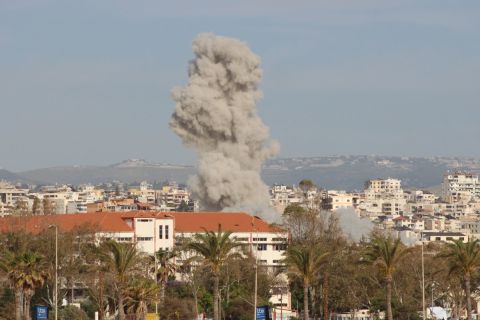
The sanctions announcement coincided with growing diplomatic momentum in Beirut, where Lebanese Prime Minister Nawaf Salam said the government is preparing for further rounds of U.S.-mediated talks with Israel following a third round of negotiations in Washington that secured a 45-day extension of the current ceasefire.
According to Lebanese officials, the next phase of diplomacy will include a military coordination meeting on May 29 involving Lebanese, Israeli, and U.S. defense representatives at the Pentagon. The discussions are expected to focus on the withdrawal of Israeli forces from southern Lebanon and the deployment of the Lebanese Armed Forces in the area.
A fourth round of political negotiations is scheduled for June 2–3 in Washington, with talks expected to address border demarcation and mechanisms related to the disarmament of non-state armed groups.
The diplomatic push reflects deep divisions within Lebanon’s political landscape. While President Joseph Aoun and Prime Minister Salam have backed negotiations aimed at stabilizing the border situation with Israel, Hezbollah has strongly rejected direct talks and remains outside the ceasefire negotiations.
Despite ongoing clashes and tensions along the border, regional observers view Washington’s financial campaign as part of a broader effort to weaken Hezbollah’s political and economic influence while strengthening the Lebanese government’s position in the negotiations.


