

ALBAWABA- US President Donald Trump has approved a landmark civilian nuclear cooperation agreement with Saudi Arabia, paving the way for a long-term partnership in nuclear energy development and expanding US involvement in Riyadh’s nuclear ambitions.
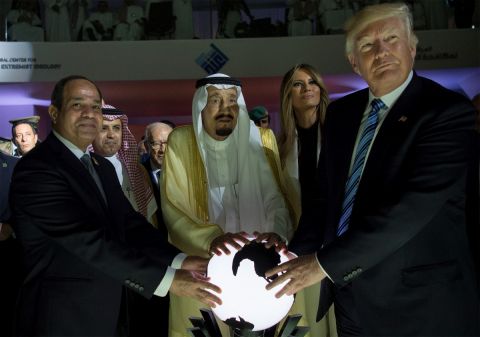
The agreement, known as a “123 Agreement” under the US Atomic Energy Act, establishes a framework for cooperation on Saudi Arabia’s civilian nuclear program and is expected to remain in effect for 30 years. It could enable American companies to participate in the construction of nuclear reactors and related infrastructure in Saudi Arabia, with the overall value of the project estimated at tens of billions of dollars.
A key and controversial element of the agreement is that it may allow Saudi Arabia to pursue domestic uranium enrichment for peaceful purposes following a joint US-Saudi assessment of its technical and economic feasibility. This marks a significant shift from previous US approaches, which often required nuclear partners to renounce enrichment and reprocessing activities as a condition for cooperation.
The agreement includes commitments to peaceful nuclear use and bilateral safeguards, but it does not fully incorporate the International Atomic Energy Agency’s Additional Protocol, which allows more extensive inspections, nor does it impose the strictest non-proliferation conditions that completely prohibit enrichment capabilities.
The deal is expected to be submitted to the US Congress for review, where it could face scrutiny from lawmakers concerned about nuclear proliferation risks and verification standards.
Trump has presented the agreement as a strategic and economic achievement, arguing that it will strengthen US-Saudi relations, create opportunities for American nuclear companies, support Saudi Arabia’s Vision 2030 economic diversification program, and limit the influence of Russia and China in the Gulf’s energy sector.
The agreement builds on broader efforts to deepen economic ties between Washington and Riyadh, including major Saudi investment commitments in the United States. Trump has emphasized the economic benefits of the partnership while downplaying concerns over potential proliferation risks.
The deal has raised concerns in Israel, which fears that allowing Saudi Arabia to develop enrichment capabilities could contribute to a regional nuclear competition, particularly given Saudi Crown Prince Mohammed bin Salman’s previous statements that Riyadh would seek nuclear weapons if Iran acquired them.
Iran has also criticized the agreement, arguing that it could encourage a nuclear arms race in the Middle East and reflects what Tehran describes as a double standard in US nuclear policy. The deal comes amid heightened US-Iran tensions involving military confrontations, disputes over the Strait of Hormuz, and broader regional rivalry.
Saudi Arabia has long argued that nuclear energy is necessary to meet rising domestic electricity demand and reduce dependence on oil revenues. However, expanding enrichment capabilities in a region marked by strategic rivalries could challenge global non-proliferation efforts.


