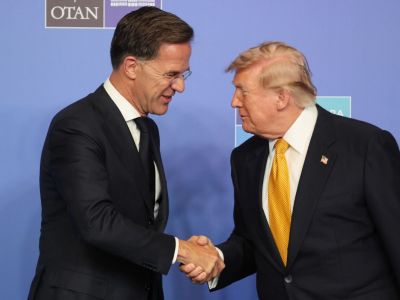


ALBAWABA - Officials familiar with the talks said quiet, high-level conversations in Miami between American and Russian delegates generated a controversial draft framework that would end the Ukraine war through massive territory concessions.
In November and December, U.S. envoys Steve Witkoff and Jared Kushner met covertly with Putin's close aide Kirill Dmitriev. A preliminary 28-point draft was shared with senior Ukrainian officials Rustem Umerov and Andriy Yermak after their marathon talks.
Despite calling its role technical, Kyiv soon revised its 20-point version, showing its disapproval of the American original. Analysts say the Miami document changed Washington's combat strategy. After nearly three years of backing Ukraine's claim to full sovereignty over its territory, the new framework appears to concede that a negotiated settlement may require Ukraine to give up some land.
US strategic circles' assumptions are reflected in the draft: Russia has a battlefield advantage, its momentum could enable deeper advances, European military support is insufficient to reverse the trend, NATO is unwilling to confront Russia, and a lasting peace may require a compromise that leaves both sides partially unsatisfied.
In this framework, the Miami proposal recognizes Russian control of Crimea, Luhansk, and Donetsk, freezes military installations in Kherson and Zaporizhzhia, provides a demilitarized buffer in Donetsk, bars Ukraine from joining NATO, and partially relieves Moscow of sanctions. Russia would leave occupied regions beyond the zones in exchange.
Ukrainian officials quickly revised the document. Their new version envisions EU membership for Ukraine by 2027, better security guarantees patterned on NATO's collective defense commitments, a larger post-war army, and no express restriction on NATO accession. Despite these adjustments, the Ukrainian version retains the American draft's territorial framework. That raises issues about whether Kyiv is willing to lose roughly 20% of its territory, including industrial and mineral riches.
President Volodymyr Zelenskyy has tried to transfer responsibility for any prospective compromises by insisting that Ukrainians decide territorial compromise through national elections or referendums. This technique spreads political accountability, enhances Zelenskyy's position after months of criticism over his prolonged term in power, and buys time by requiring a comprehensive ceasefire before a nationwide vote. It also requires Washington and Moscow to recognize that people of the disputed territories are still Ukrainian citizens whose permission is needed for a final settlement.
President Donald Trump wants to make progress toward ending the war before next year's midterm elections, making the Miami talks extremely sensitive. A referendum might postpone a final agreement, jeopardizing the administration's diplomatic breakthrough. Russia advances in eastern Ukraine, and Kyiv looks to be focusing on surviving the present phase of the conflict while preparing for a statewide decision that may define Ukraine's borders for generations.