

ALBAWABA- Explosions shook the Saudi capital on Wednesday after Iranian ballistic missiles targeted the city, marking a dramatic escalation in the widening regional conflict.
Saudi air defenses reportedly intercepted four incoming missiles over Riyadh, with debris scattered across parts of the city and emergency alerts sent to residents for the first time. Authorities said the immediate threat had passed, with four confirmed casualties, but no major damage.
The strikes came hours before a high-level meeting of Arab and Islamic foreign ministers in Riyadh to discuss regional security as tensions surge across the Gulf.
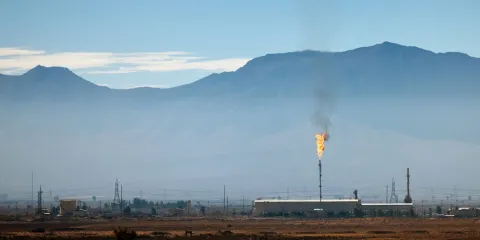
The escalation follows a U.S.–Israeli strike earlier Wednesday on Iran’s South Pars gas field, the world’s largest natural gas reserve. The attack hit processing facilities in Bushehr province, igniting fires and halting production in key phases, in what Iran described as a dangerous escalation threatening global energy supplies.
In response, the Islamic Revolutionary Guard Corps issued evacuation warnings for civilians and workers near major Gulf energy sites, declaring them “legitimate targets.” The list included Saudi Arabia’s SAMREF refinery and Jubail petrochemical complex, Qatar’s Ras Laffan and Mesaieed facilities, and the UAE’s Al Hosn gas field.
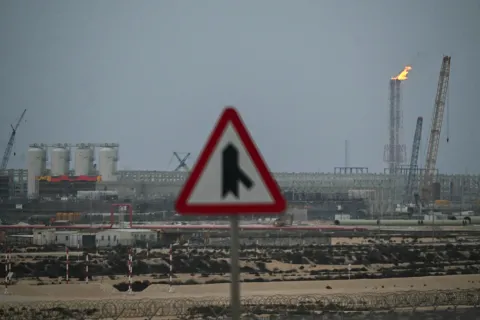
Hours later, missiles struck Qatar’s Ras Laffan Industrial City, the world’s largest LNG export hub. QatarEnergy confirmed significant damage but said all personnel were accounted for, with no casualties reported. Fires at the site were later brought under control, though images showed thick smoke rising over the area.
In Saudi Arabia, air defences also intercepted a drone targeting a gas facility in the Eastern Province, underscoring the scale of the attacks. Reports of attempted strikes near Bahrain’s energy infrastructure remained unconfirmed.
Following talks with Iranian Foreign Minister Abbas Araghchi, Qatar’s Prime Minister Mohammed bin Abdulrahman Al Thani condemned the strikes as a violation of sovereignty and called for an immediate halt to escalation, warning against dragging neighboring states into the conflict. Qatar had earlier criticized the Israeli strike on South Pars as “dangerous and irresponsible.”
Saudi Arabia, hosting the emergency ministerial meeting with officials from Egypt, Turkey, Qatar, and other regional states, reaffirmed its right to self-defence while urging de-escalation. Participants echoed concerns over growing instability and stressed the need for coordinated diplomatic efforts to contain the crisis.
The latest developments have intensified fears of a broader confrontation centered on energy infrastructure. Global oil and gas markets reacted sharply, with prices surging amid concerns over disrupted supplies and prolonged instability across key production hubs.