

ALBAWABA- U.S. Ambassador to Israel Mike Huckabee said Iran has failed to grasp President Donald Trump’s resolve, arguing that Tehran underestimated Washington’s response following U.S. strikes on Iran’s Fordow nuclear facility earlier this year.
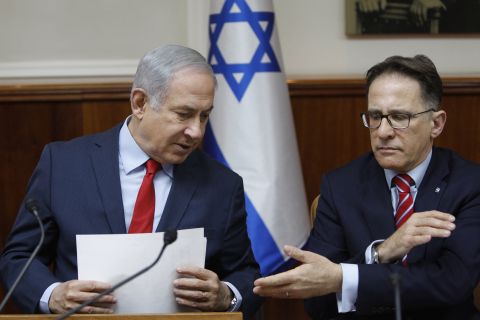
Speaking at a conference on Israeli–American relations at the Institute for National Security Studies (INSS) on December 22, 2025, Huckabee said Iran “did not fully understand President Trump’s message” after the June strikes.
He suggested Tehran is now seeking to reconstitute its nuclear capabilities by expanding facilities deeper underground, indicating the attacks had not fully deterred Iran’s ambitions.
Huckabee framed Iran’s threats as extending beyond Israel to include the United States and Europe, pointing to what he described as Tehran’s 46-year record of hostility toward Washington. He also highlighted the June deployment of U.S. B-2 bombers as a decisive signal that Iran miscalculated Trump’s willingness to use force.
The remarks come amid heightened U.S.–Israel coordination on regional security during Trump’s second term, which has prioritized containing Iran through a mix of military pressure and diplomacy.
Israeli Prime Minister Benjamin Netanyahu is scheduled to visit Washington on December 29 for talks with Trump at Mar-a-Lago, where he is expected to raise concerns over Iran’s nuclear and missile programs. Israeli media reports say Netanyahu plans to present updated strike options against Iranian targets.
Israeli officials have also warned that recent Iranian missile exercises could be masking preparations for potential attacks, raising fears of miscalculation and a wider regional conflict that could undermine recent de-escalation efforts.
Adding to the pressure, Israel Defense Forces Chief of Staff Lt. Gen. Herzi Halevi recently described Iran’s ballistic missile program as an existential threat comparable to its nuclear ambitions, signaling Israel’s readiness to strike preemptively “wherever required.”
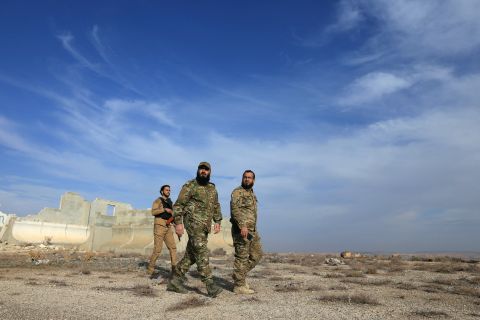
Israeli assessments warn that Iran’s missile production capacity could allow for significant monthly output, reinforcing calls for urgent countermeasures.
Meanwhile, Iranian state media reported missile drills in several cities on Monday, including Tehran, Isfahan, Mashhad, Khorramabad, and Mahabad. Iran’s state broadcaster and the semi-official Nournews published videos appearing to show missile launches, though exact locations were not specified.
Iranian officials insisted the exercises were defensive. Foreign Ministry spokesperson Esmaeil Baghaei rejected any discussion of Iran’s military capabilities, saying the missile program was developed solely to protect Iran’s sovereignty and was not open to negotiation. “Iran’s defensive capabilities are by no means an issue that can be discussed,” Baghaei said.