



ALBAWABA- Saudi Arabia’s King Salman bin Abdulaziz has reshuffled the kingdom’s investment leadership as Riyadh recalibrates its ambitious Vision 2030 reform program.
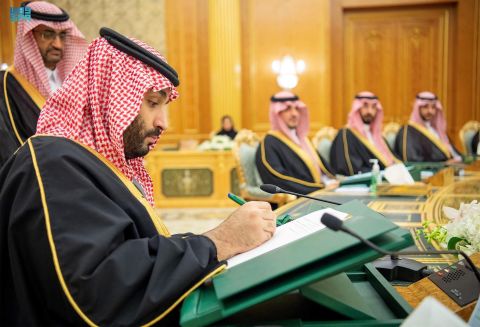
In a royal decree issued on Thursday, Khalid bin Abdulaziz Al-Falih was relieved of his duties as Minister of Investment and reassigned as Minister of State and member of the Council of Ministers. Fahd bin Abduljalil bin Ali Al-Saif was appointed as the new investment minister.
The decree formed part of a broader round of appointments that included a new Public Prosecutor, changes in judicial and advisory posts, and the naming of governors for several regions.
Al-Saif, who has held senior roles linked to the Public Investment Fund (PIF) and served on multiple corporate boards, is widely regarded as having strong experience in sovereign wealth management. His appointment comes at a time when the kingdom is seeking to accelerate foreign investment and refine its economic diversification strategy.
Saudi Arabia’s Vision 2030 agenda aims to reduce reliance on oil revenues by expanding sectors such as tourism, mining, artificial intelligence, and infrastructure. However, the program faces mounting fiscal pressures and slower-than-expected foreign capital inflows.
The $925 billion PIF is preparing to launch a revised five-year strategy focused on sectors offering faster returns, while reportedly reassessing the scale and pace of some high-profile mega-projects.
Among them is Neom, the flagship $1.5 trillion futuristic city project. In recent months, plans for “The Line”, originally envisioned as a 170-kilometer linear city, have been scaled back following cost overruns and construction challenges. The 2029 Asian Winter Games, set to be hosted in Neom’s Trojena resort, have also been indefinitely postponed.
The ministerial change signals a push to restore investor confidence and tighten execution of Vision 2030 initiatives amid global economic headwinds and domestic budget constraints.