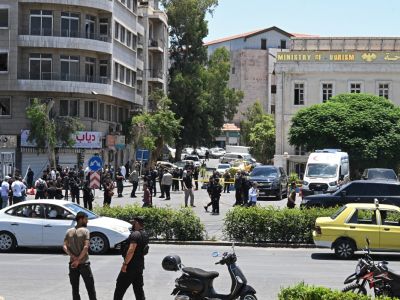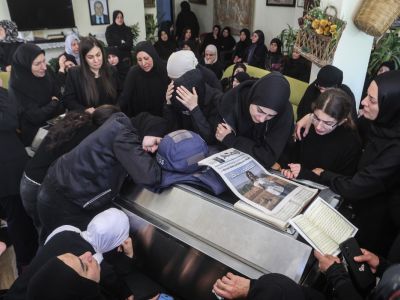


ALBAWABA- Several people were killed and injured after an explosive device detonated on a passenger bus in the Damascus suburb of Jaramana on Thursday, Syrian state media reported, as Syrian and Turkish officials met in Ankara to strengthen security and counterterrorism cooperation.
Syrian state-run Ekhbariya TV, citing a security source, said preliminary investigations indicated that the blast was caused by an explosive device planted on the vehicle. Authorities have not released an official casualty toll, and no group has claimed responsibility.
The bombing coincided with talks in Ankara between Syrian Foreign Minister Asaad Hassan al-Shaibani and Turkish Foreign Minister Hakan Fidan, who pledged to expand bilateral cooperation on security, defense, border protection, and counterterrorism.
Speaking at a joint press conference, Fidan said Syria's stability was directly linked to Turkey's national security, stressing that instability in cities such as Damascus, Aleppo, and Hama inevitably affects Turkey. He also described Israeli military operations in Syria as one of the most serious threats to the country's stability, urging Israel to respect Syria's sovereignty and comply with the 1974 Disengagement Agreement.
Al-Shaibani echoed the need for closer coordination against terrorism and armed groups operating outside state authority. He also reiterated Syria's call for Israel to withdraw to positions held before Dec. 8, 2024, while both sides discussed plans to establish a high-level strategic cooperation council and expand collaboration on reconstruction and regional security.
This blast came after a series of attacks in early July 2026 that coincided with French President Emmanuel Macron’s state visit to Syria, including two improvised explosive devices that detonated near the Four Seasons Hotel and the Ministry of Tourism in central Damascus on 7 July, killing at least one person and wounding dozens of civilians and security personnel, as well as earlier incidents that month such as a café bombing near the Justice Palace that left multiple dead and injured.
The attack highlights the persistent security challenges facing Syria despite efforts by the country's new administration to restore stability following the fall of former President Bashar al-Assad's government in late 2024. Previous bombings in and around Damascus have been attributed to extremist groups and remnants of the former regime, although responsibility for Thursday's attack remains unknown.