


ALBAWABA- Coordinated drone attacks struck major energy installations across Saudi Arabia, Kuwait, and the United Arab Emirates on Thursday, causing significant disruption to oil production and export infrastructure just as US and Iranian delegations opened Pakistan-brokered ceasefire talks in Islamabad.
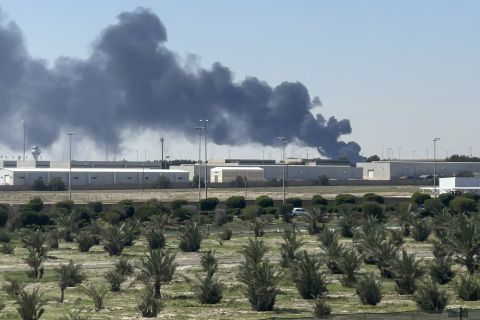
Saudi Arabia suffered the most severe impact. A Ministry of Energy source said “vital energy facilities” across the kingdom, including oil, gas, petrochemical, and power infrastructure in Riyadh, the Eastern Province, and Yanbu, were targeted in multiple waves. The attacks killed one Saudi Aramco security officer and injured seven others.
Among the affected sites were a pumping station on the East-West pipeline, which temporarily cut around 700,000 barrels per day of capacity; the Manifa production facility, which lost an estimated 300,000 barrels per day; and the Khurais plant, further reducing output. Refineries in Jubail, Ras Tanura, Samr, and Riyadh also reported damage, while fires at Ju’aymah disrupted gas and liquefied petroleum gas operations.
Kuwaiti authorities confirmed strikes on oil and power infrastructure, while officials in Dubai acknowledged limited targeting of energy-related sites, with damage assessments still underway.
The scale and coordination of the attacks triggered immediate suspicion of Iranian involvement, though Tehran strongly denied responsibility. The Islamic Revolutionary Guard Corps said Iranian forces had not launched any attacks during the ceasefire period, adding that any Iranian action would be officially announced. It suggested the strikes could instead be the work of Israel or the United States.
The escalation comes less than 48 hours into a 15-day truce brokered by Pakistan, which is intended to halt hostilities between the United States and Iran and stabilize regional energy flows, including the reopening of the Strait of Hormuz.
The Islamabad talks were widely viewed as a critical step toward de-escalation.
Saudi officials warned that repeated targeting of energy infrastructure threatens supply security and risks increased volatility in global oil markets. Diplomats in Islamabad said the latest attacks could undermine early negotiations and complicate efforts to establish a durable ceasefire framework.


