

ALBAWABA- The administration of US President Donald Trump has reached secret understandings with the Syrian government and Israel to remove nuclear materials stored at a covert site in Syria, according to US and Israeli officials cited by Al-Arabiya, which reported on an investigation by Axios.
The operation is being coordinated with the International Atomic Energy Agency (IAEA) and is intended to secure the materials and prevent a potential confrontation between Israel and Syria. US officials said the arrangement reflects Washington’s close working relationship with Syria’s new government and its efforts to contain security risks stemming from the country’s former nuclear program.
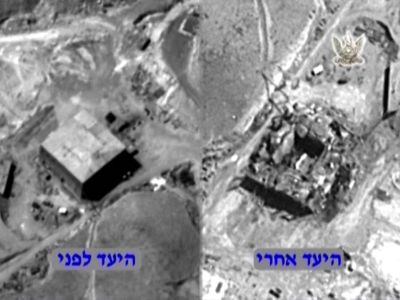
The materials are linked to the nuclear program developed under former President Bashar al-Assad, which centred on the clandestine Al-Kibar reactor. Israel destroyed the reactor in a 2007 airstrike, but several associated research, development and storage facilities remained, most of them inactive.
Following the fall of the Assad government, the IAEA reached an agreement with Syria’s new authorities allowing inspectors to visit Al-Kibar and other sites associated with the former nuclear program. One such location, referred to as “the site,” has reportedly been under Israeli surveillance for about two years.
According to US officials, materials stored there include yellowcake, a uranium-processing product, as well as residues and other material left over from the Al-Kibar project. Although the material is not considered suitable for producing a nuclear weapon, US officials said it could potentially be used in a radiological “dirty bomb.”
Israeli forces reportedly bombed the entrances to the site shortly after the Assad government fell, seeking to prevent access to the materials. For more than a year, US and Israeli officials discussed how the materials could be secured and removed. Israel reportedly warned Washington that it would strike the site again if the materials were not removed or if Syria attempted to access them.
The issue became more urgent several weeks ago after Israeli surveillance detected activity near the site that raised concerns that Syrian authorities might be attempting to gain access to the materials. Israeli officials also reportedly suspected that Turkey could be assisting Syria in accessing the site.
Washington urged Israel not to launch another strike and instead brought the IAEA into the effort. The talks resulted in an agreement signed about three weeks ago between the IAEA and the Syrian government to remove the nuclear materials.
The removal process, however, has not yet been completed. US officials said the materials remain at the site while arrangements between Syria and the IAEA are finalized. Washington and Israel continue to monitor the situation. US officials said the parties are satisfied with the agreement and hope the transfer will begin soon and be completed before the end of 2026.