

ALBAWABA- US Central Command announced on 13 August the establishment of Task Force Falcon Strike, the first multi-domain, multinational attack drone task force in the Middle East. The unit will operate one-way attack drones across air, surface and subsurface domains, staffed by US personnel and regional partners.
The launch builds on Task Force Scorpion Strike, created nine months earlier as the US military’s first dedicated one-way attack drone squadron in the region. Scorpion Strike achieved milestones that included the first launch of an aerial attack drone from a US Navy warship in December and the use of unmanned systems during Operation Epic Fury and strikes on Iranian port facilities in July.
Adm. Brad Cooper, CENTCOM commander, said Falcon Strike would expand on those successes by integrating innovation from regional allies. “Integrating and deploying our new capabilities together will help us rapidly realize the new possibilities that are on the horizon,” he stated.
CENTCOM has begun consulting regional partners and issuing formal invitations. Personnel from US Special Operations Command Central will lead the task force staff. Once partners join, the force is expected to scale attack drone capabilities into a unified multinational deterrent across the CENTCOM area of responsibility.
The announcement comes amid ongoing US-Iran tensions and ahead of the expected withdrawal of remaining US forces from Iraq by 30 September. It also reflects the growing prominence of unmanned systems, a domain in which Iran and its partners have demonstrated operational experience through repeated drone and unmanned vessel attacks on regional targets.
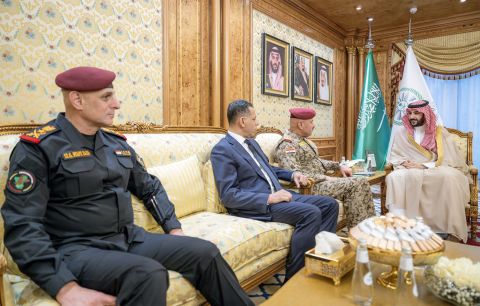
On the same day, Saudi Arabia’s Ministry of Defense reported progress on a parallel regional initiative. The third planning meeting of the Multinational Maritime Defense Coalition was held at the Western Fleet Command in Jeddah, with representatives from 39 countries. Fifteen nations have signed the joint statement, and 13 have completed national procedures and signed the coalition charter, marking the formal start of institutional and operational activation.
Saudi Arabia will provide the coalition commander, with Pakistan supplying the deputy commander for the first term. A permanent headquarters, official logo and organizational frameworks have been agreed. The meeting advanced arrangements for integrating officers and personnel into the multinational command, joint maritime operations centre and intelligence centre.
Saudi officials described the development as a step toward collective maritime security, protection of freedom of navigation through key passages and straits, and the continuity of international trade. With several countries completing accession procedures, the coalition is shifting from framework-building to operational readiness.
Together, the CENTCOM drone task force and the Saudi-led maritime coalition illustrate concurrent efforts by the United States and regional partners to strengthen multi-domain deterrence and collective security structures in response to persistent threats across the Middle East.


