

ALBAWABA- UAE-backed separatist Southern Transitional Council (STC) forces tightened their grip on Hadramout on Thursday, seizing key cities, military sites, and the PetroMasila oilfields in a sweeping offensive that has upended Yemen’s southern balance of power.
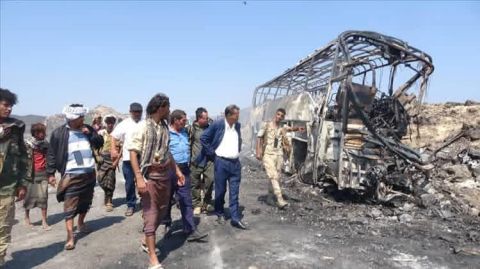
The campaign, dubbed Promising Future, has brought nearly one-third of Yemen’s territory under STC influence, deepening fears that the anti-Houthi coalition is fracturing beyond repair.
STC-aligned Hadrami Elite Forces took control of Seiyun on Wednesday after brief clashes with units from the First Military Region, capturing the presidential palace, the airport, and strategic sites in Tarim.
By Thursday, they had pushed Saudi-backed Tribal Alliance fighters from the oilfields, briefly halting production before resuming operations under STC oversight. At least four STC fighters were killed in skirmishes around Ghuraf and al-Abr as artillery shook Wadi Hadramout.
While celebrations erupted in Aden and Shabwa, residents in Seiyun voiced concern over flight disruptions and restricted humanitarian access.
Top STC figures, including Omar Ali Al-Bidh, defended the advance as an effort to secure smuggling routes and “stabilize” the region, denying any intention to unseat Yemen’s Presidential Leadership Council.
Yet videos of southern flags appearing at Al-Mahra’s border crossings with Oman hinted at looming expansion. The STC insisted these were acts of local solidarity, not evidence of an invasion.
A Saudi-brokered truce helped prevent direct Riyadh-Abu Dhabi clashes after Tribal Alliance forces withdrew from oil facilities under mediation. But the showdown underscores the deepening proxy rivalry shaping Yemen’s war.
Since September 2014, the conflict has pitted the Houthi movement, controlling Sana’a and much of the north, against a Saudi-led coalition backing the internationally recognised government. The 2022 Riyadh Agreement attempted to unify anti-Houthi factions under the eight-member Presidential Leadership Council, but divergent agendas have repeatedly strained the alliance.
Formed in 2017, the STC seeks southern independence and dominates Aden with UAE-funded Security Belt and Elite Forces. Saudi Arabia, wary of expanding Emirati influence, supports tribal actors like Sheikh Amr bin Habrish, whose brief seizure of oilfields last week triggered the current escalation.
With the STC now holding Aden, Abyan, Dhale, Lahj, Shabwa, and most of Hadramout, over 155,000 km², the south of Yemen faces an accelerating slide toward partition driven by Gulf competition over ports, energy routes, and strategic coastline.
Notably, the prolonged deepening internal conflicts among the factions operating under the Presidential Leadership Council, an entity sponsored in exile by Saudi Arabia and the UAE, have undermined the very objectives for which it was created- restoring state legitimacy and mounting a unified front against the Houthis.
Instead, these rivalries have prolonged the war, leaving millions of Yemenis at the mercy of competing armed groups. With public salaries unpaid for nearly eight years and the majority of the population living below the poverty line and dependent on humanitarian aid, these divisions have compounded Yemen’s humanitarian catastrophe, revealing how elite power struggles continue to eclipse the national interest and deepen the suffering of ordinary Yemenis.