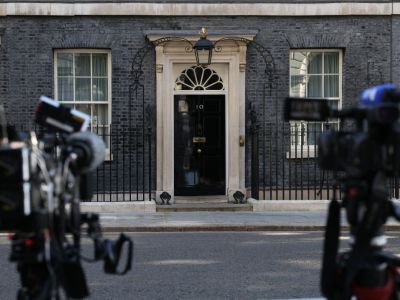


ALBAWABA- British Prime Minister Keir Starmer arrived in Beijing on Wednesday for a four-day visit, marking the first official trip by a UK leader to China since 2018 and signaling a pragmatic reset in bilateral relations.
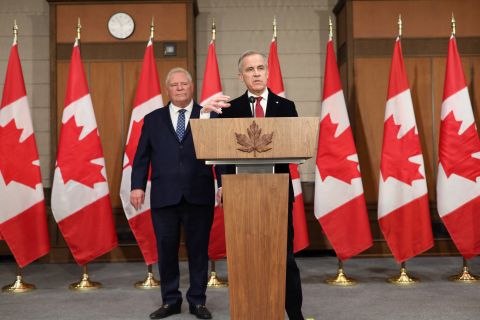
Accompanied by over 50 business representatives from sectors including finance, technology, and culture, Starmer met President Xi Jinping and Premier Li Qiang to discuss strengthening cooperation in trade, investment, clean energy, and education.
The visit aims to stabilize ties strained by previous UK criticisms of China’s human rights record and security concerns, while exploring potential agreements in electric vehicles, renewable energy, and other strategic sectors.
Starmer emphasized the importance of a “consistent and pragmatic partnership” to make the UK “better off,” stressing that engagement with China should bring economic benefits while maintaining national security safeguards.
He highlighted the need for stability and clarity after years of inconsistent UK policy, and underlined that Britain will not be forced to choose between relations with the United States and engagement with China.
Chinese officials welcomed the visit as an opportunity to promote “mutual benefit” and inject new momentum into bilateral ties, with both sides publicly sidestepping contentious issues such as Hong Kong and Taiwan to focus on practical cooperation.
This outreach comes amid a broader realignment in global trade and diplomacy. Earlier this month, Canadian Prime Minister Mark Carney visited Beijing, where Ottawa and Beijing announced a new strategic partnership that reduced tariffs on electric vehicles and canola, aimed at strengthening energy, agri-food, and trade cooperation.
Carney described the agreement as a response to “new global realities,” and the two sides issued joint statements backing China’s hosting of the 2026 APEC summit. In parallel, the European Union on January 27 finalized a landmark free trade agreement with India, removing tariffs on more than 90% of goods and opening deeper access to India’s 1.45 billion-strong market, with EU officials projecting a doubling of exports by 2032.
Together, these moves reflect a wider pivot by U.S. allies toward multilateral engagement with non-Western powers, particularly China and India, after decades of U.S.-EU dominance in global trade and diplomacy.
Governments are increasingly diversifying partnerships amid U.S. President Donald Trump’s renewed “Make America Great Again” agenda, which has emphasized unilateral tariffs and trade confrontation over multilateral norms.
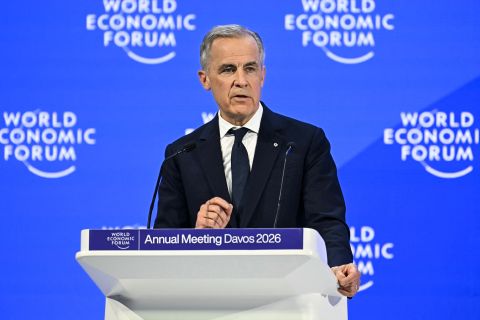
Trump’s threats of sweeping tariffs on Canada over its China deal, along with similar rhetoric aimed at the UK and the EU, have reinforced concerns over economic coercion and policy volatility.
Washington’s growing skepticism toward institutions such as the World Trade Organization and its readiness to use tariffs as a political tool have accelerated efforts by middle powers to reduce exposure to U.S. risk. This has encouraged alternative trade frameworks, regional pacts, and China-led initiatives, adding to the increasingly fragmented trade blocs.
The shift offers greater balance and autonomy in the global system. Against this backdrop, Starmer’s visit to Beijing underscores the UK’s attempt to navigate a multipolar order, seeking economic opportunity while preserving strategic independence.