


ALBAWABA - President Donald Trump announced that the United States launched a special operation to free ships stuck in the Strait of Hormuz starting Monday morning, Middle East time.
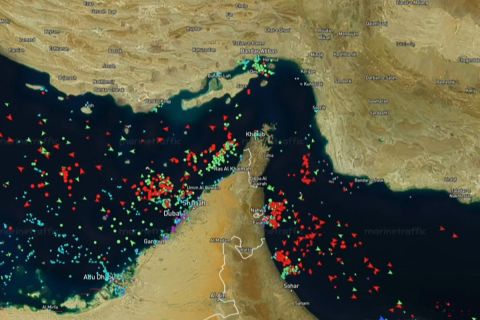
Trump's decision to free ships stranded in the Strait of Hormuz drew mixed reactions in the American press. Some newspapers viewed the move as a clear challenge to Iran and fraught with risks, fearing that the war would resume.
In response, Iran's Khatam al-Anbiya Central Headquarters responded to the U.S. operation to free ships in the strait by saying, "We maintain the security of the Strait of Hormuz with full force and prevent any ship from passing through without coordination with our armed forces."
Iran warned that any force, especially the U.S. Army, would come under attack if it tried to approach the Strait of Hormuz.
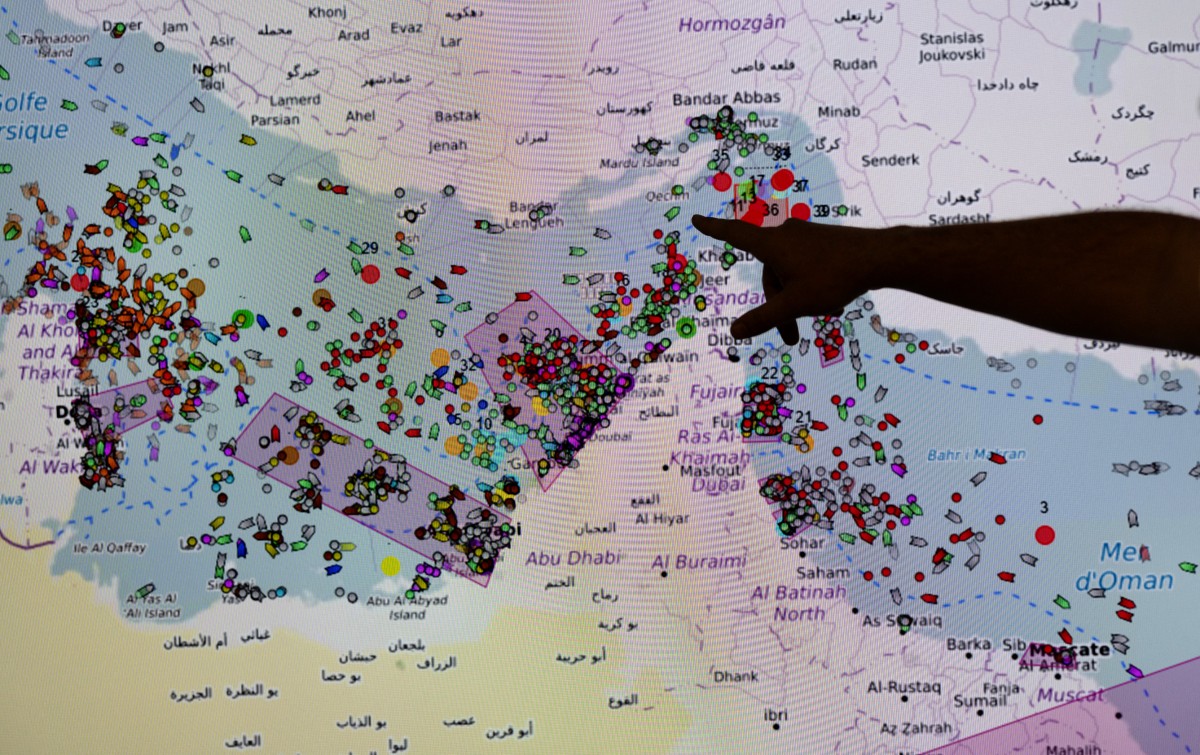
French Commandant Thomas Scalabre points towards the positions of ships on the Strait of Hormuz on a screen at the MICA center in Brest, western France, on April 27, 2026. Photo by FRED TANNEAU / AFP
The New York Times reported that the initiative, justified by the president as a way to help the stranded ships leave the strait as part of what he called "Project Freedom", raised many questions and carries some risks.
Axios quoted officials as saying that US Navy ships would be in the vicinity in case the Iranian military attacked vessels transiting the Strait of Hormuz.
They added that the US Navy would provide the ships with information on safe passages in the strait that are free of Iranian mines.
According to Bloomberg, over 800 freighters are stuck inside the Gulf, mostly waiting to leave, and more than 1,000 ships are waiting on both sides of the strait to pass through.


