

ALBAWABA- Major Gulf oil producers are rapidly ramping up crude exports as regional shipping routes recover, with Saudi Arabia restarting loadings at its critical Ras Tanura terminal after a nearly four-month suspension, while Kuwait and Qatar also boost output amid improving security conditions in the Strait of Hormuz.
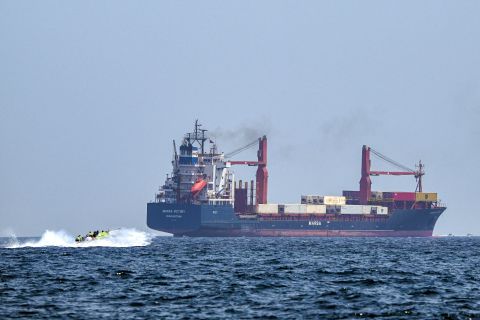
Saudi Aramco resumed crude shipments on Friday at Ras Tanura, one of the world’s largest oil export hubs on the Gulf coast. Shipping data indicated that two Very Large Crude Carriers (VLCCs) operated by Bahri were loaded at the terminal, with a third tanker waiting offshore. Each VLCC typically carries around 2 million barrels of crude.
The restart marks a significant step in the recovery of Gulf energy flows following disruptions earlier in 2026 linked to heightened regional tensions involving Iran, which severely restricted access through the Strait of Hormuz. During the disruption, Saudi Arabia redirected much of its exports through alternative routes, including Red Sea terminals such as Yanbu via the East-West Pipeline.
Kuwait and Qatar are also accelerating production recovery. Kuwaiti officials have indicated output could return to around 2 million barrels per day within days, while Qatar is restoring liquefied natural gas (LNG) and hydrocarbon exports as maritime risks ease across key shipping lanes.
Industry sources say millions of additional barrels are now re-entering global markets as Gulf infrastructure resumes normal operations and tanker availability improves, signaling a broader regional rebound in energy flows.
The export disruptions began in early 2026 amid escalating tensions and attacks linked to Iran, which disrupted shipping in the Strait of Hormuz and forced several Gulf producers to sharply curtail or reroute exports. While Saudi Arabia and the United Arab Emirates relied on pipeline alternatives, Kuwait experienced near-total export stoppages for periods of the crisis.
A recent U.S.–Iran understanding and the gradual reopening of maritime corridors have enabled a faster-than-expected recovery in Gulf energy trade. However, analysts caution that full normalization of output and logistics may extend into late 2026 or early 2027 due to infrastructure repairs and demining operations.


